
2022.12.06
Industry innovations over time – from fire & ice to electricity
In the past, fire was used for heating and ice for cooling, but about 100 years ago electricity made its entrance in Sweden and within a few decades, households suddenly had access to a range of innovations that really improved and simplified everyday life.
The fireplace is an early innovation that provided heat, light and the opportunity to cook – it was the heart of the home. In the 15th century, fireplaces with an open hearth, flue and chimney were used. From the mid-18th century, tiled stoves were used in more bourgeois environments, and at the end of the 19th century, the iron stove came.

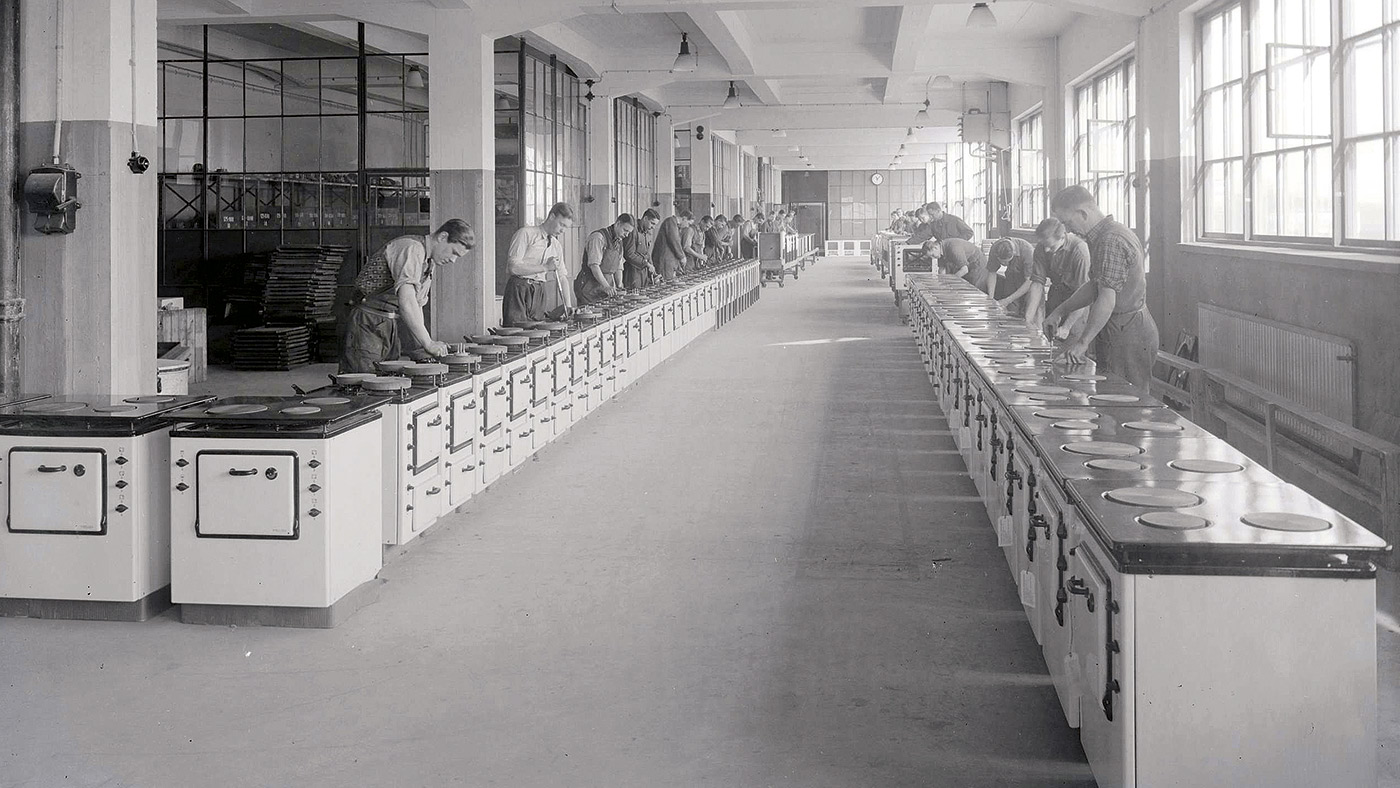
The stove – 1920s
In 1780, the Englishman Thomas Robinson invented the first wood-burning iron stove, with an open hearth, oven on one side and a container for hot water on the other. About 20 years later, the closed iron stove was invented, which saved energy and prevented smoke and soot from pouring into the cottages. After that, the gas stove made its debut, but the big breakthrough did not occur because gas was expensive and many kitchens still needed an open fireplace.
The first electric stoves were displayed at the Electrical Exhibition at Crystal Palace in London in 1891. The electricity grid was not well developed and few could afford electricity, so development was slow. It took until the 1920s before it took off, and in 1920 electric stoves were launched in Sweden by Helios, Therma and Volta.
The Swede Gustaf Dalén, Nobel Prize winner in physics in 1912, developed the AGA stove in the early 1920s, after his wife complained about her old wood stove. Dalén developed his product for seven years before the stove was released on the market in 1929. The first AGA stove was fired with coke and produced a temperature of almost 500 degrees inside the stove. One advantage of the AGA stove was that it could burn 24/7 on very little fuel, a disadvantage being that it weighed from 400 kg because it was made of cast iron. By 1948, the AGA stove had sold 100,000 units and was manufactured in Sweden until 1957. The AGA stove is still manufactured – in the UK – and can also be powered by wood, gas, oil or electricity.
The refrigerator – 1920s
4,000 years ago, people in Mesopotamia dug pits and filled them with ice and snow from the mountains. For many years, snow and ice were the only way to cool or freeze food and drink.
The development of better refrigeration technology came mainly from the fact that we needed to be able to transport food longer distances by rail than could be done with ice as cooling, as well as requests from companies in the meat industry and companies that wanted to cool the ice that they then sold to households so that they could cool their food.
In 1879, German Carl von Linde manufactured the first refrigerator intended for use in the home kitchen – however, like contemporary competing products, it was a relatively dangerous, noisy, inefficient and expensive product.
Carl Munters and Baltzar von Platen were two Swedes who aimed to produce a small, easy-to-maintain refrigerator without a compressor or moving parts. In 1922, they presented their refrigerator as a joint thesis at the Technical University of Stockholm, at the same time as they applied for a patent for their invention. The so-called absorption refrigerator was flexible because it could be powered by electricity, gas or kerosene. The company AB Arctic bought the licensing rights to the refrigerator in 1923, and in 1925 an improved model was presented at the exhibition in Stockholm – in the same year, Electrolux bought AB Arctic and began mass-producing the refrigerator, which soon became a worldwide success. Baltzar von Platen and Carl Munters were also employed by Electrolux to further develop the refrigerator. Up until the beginning of the 1960s, around 10 million refrigerators of the type designed by these two Swedes were manufactured.
Refrigerators used to be explosive, but with the introduction of freon as a refrigerant in the 1920s, they became much safer. It was later discovered that freon damages the ozone layer, which caused the industry to switch refrigerants – in 1993, Electrolux became the first manufacturer to launch refrigerators completely free of freon.
The Freezer – 1960s
At the beginning of the 20th century, it was common to have an ice chest in the kitchen or serving hall – a wooden box lined with zinc sheet metal, to which the iceman regularly delivered blocks of ice. Elektro-Helios launched the freezer in 1952. Production took place in Mariestad, where seven freezers were produced per day, to be transported by horse and cart down to the railway station. The 100,000th freezer unit left Mariestad in 1960. Since people were moving to the cities at a rapid pace, Elektro-Helios discovered the need for a new type of freezing device. Elektro-Helios presented the freezer and showed city dwellers what freezing food meant. A popular product was the cooperative freezer, which was placed in the basement of apartment buildings where tenants rented a lockable storage compartment.
The vacuum cleaner – 1920s
Vacuum cleaners existed in Sweden as early as the beginning of the 20th century, but back then they were products weighing about a ton, equipped with an internal combustion engine or electric motor and moved around by horses to clean inside castles via long hoses through the windows.
A significantly smaller model was invented by James Spangler in the United States using a box, a fan, a silk pillowcase and a broom – the year was 1908 and Spangler sent the invention to his cousin Susan Hoover, who showed it to her husband William Hoover – who bought the patent, started production and founded The Hoover Company.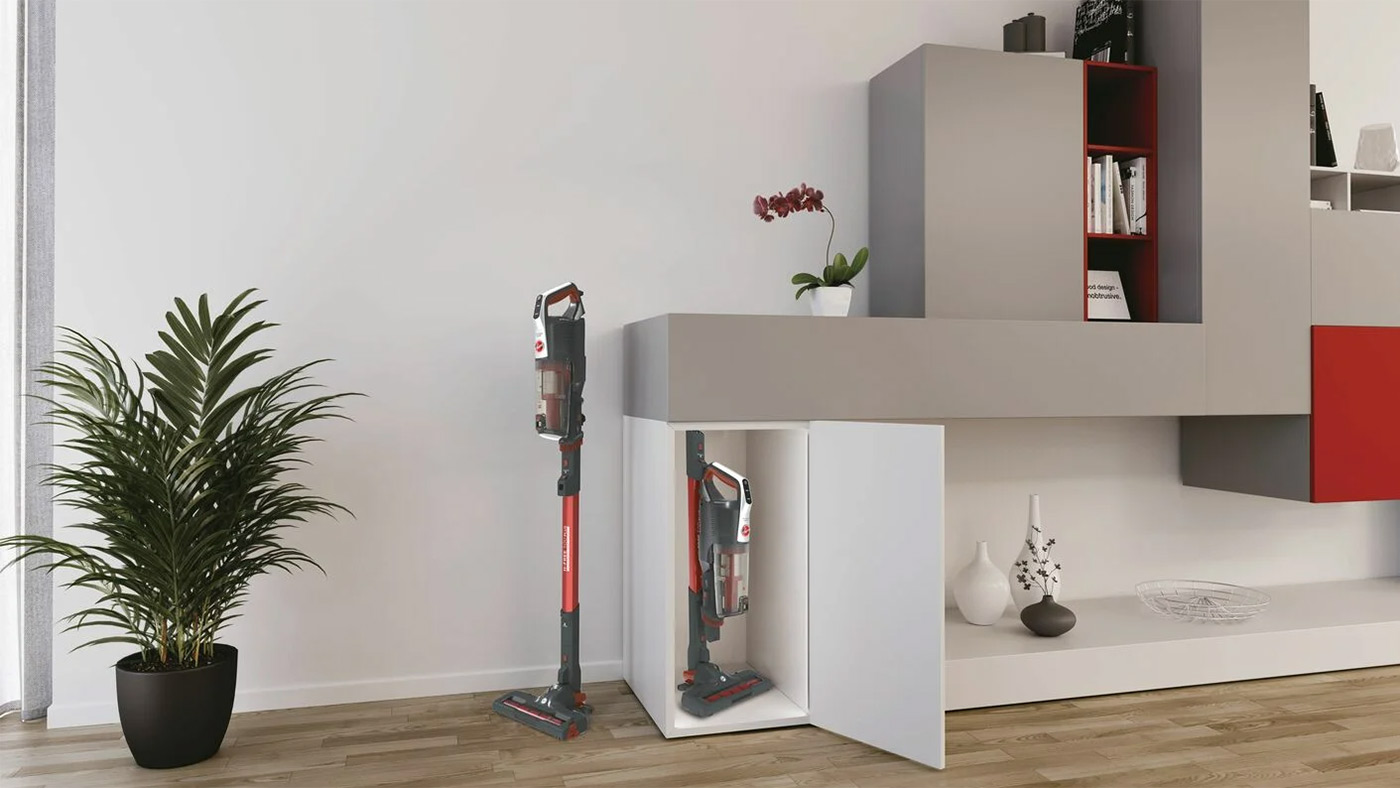
In the same year, 1908, Axel Wenner-Gren saw an electric vacuum cleaner in a shop window in Vienna, Austria, and realized that the product had great potential if it could be made smaller and lighter. In 1912, Wenner-Gren began collaborating with AB Lux and they produced their first vacuum cleaner, the Lux I (weighing 14 kg), which began to be sold that same year by salespeople knocking on doors to demonstrate the product in homes. The following year, the Lux II (now weighing 9 kg) was introduced, which cost half as much as its predecessor, and demand was high. In 1919, Electrolux was founded, following an agreement between Wenner-Gren's company (which sold the vacuum cleaners) and AB Lux (which manufactured them).
You can read more about the history of the vacuum cleaner in our previous article "”The vacuum cleaner has become a trio”".
The dishwasher – 1940s
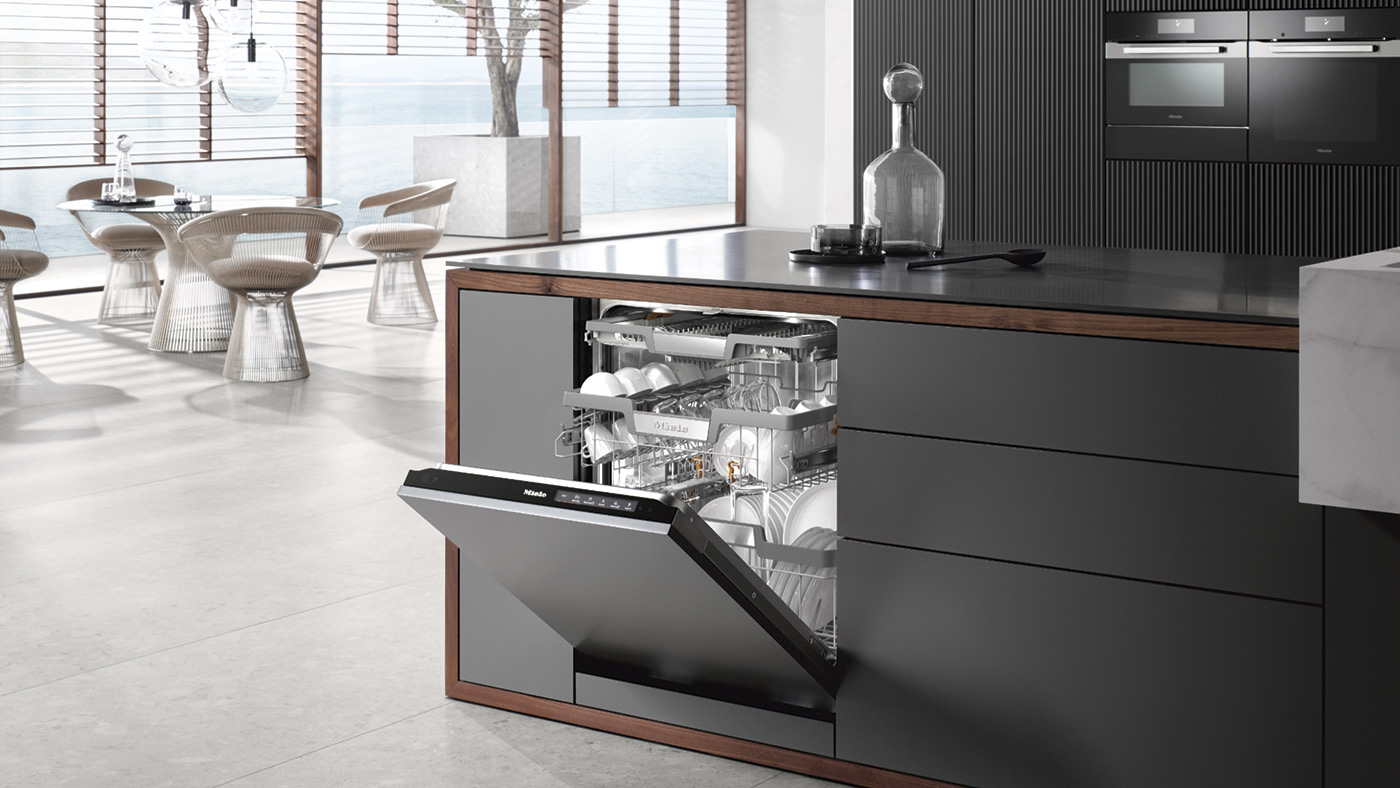
The dishwasher was invented by Josephine Cochrane in the United States in 1886, because she didn't like how the servants handled her fine china when they washed it, and her innovation, which used water pressure, won a prize at the World's Fair in Chicago in 1893.
What made Cochrane's dishwasher work better than previous models was that it injected hot water under pressure. Josephine Cochrane sold her invention to restaurants and hotels, and after her death her company was bought by Hobart, which later became KitchenAid, which became Whirlpool Corporation. The first electric dishwashers began production in 1929, but did not become popular until after World War II.
The washing machine – 1960s
The first washing machines were hand-cranked and made of wood, and were launched in the late 18th century. In 1782, a patent was taken out for a washing machine with a rotating drum, a solution that is still used in most washing machines today. However, it was not until the 20th century that washing machines for home use appeared on the market. In 1950, 8 percent of Swedish households had access to a laundry room, by 1965 the figure was 90 percent.
The electric toothbrush – 1960s
Archaeologists in Egypt have found 5,000-year-old, chewed sticks with a fringed end that they believe were used as toothbrushes. Toothbrushes resembling the ones we use today existed in China in the 16th century and were made of bamboo or bone and provided with boar bristles.
During the 18th century Enlightenment, scientific research began to lead to many new insights. In the 1720s, the French surgeon Pierre Fauchard (1678-1761) published a book on dental health in which he pointed out the role of sugar in tooth decay. Sugar had become an increasingly common ingredient in European cuisine, especially after 1747 when it began to be refined from sugar beets, which could be grown at more northerly latitudes than sugar cane.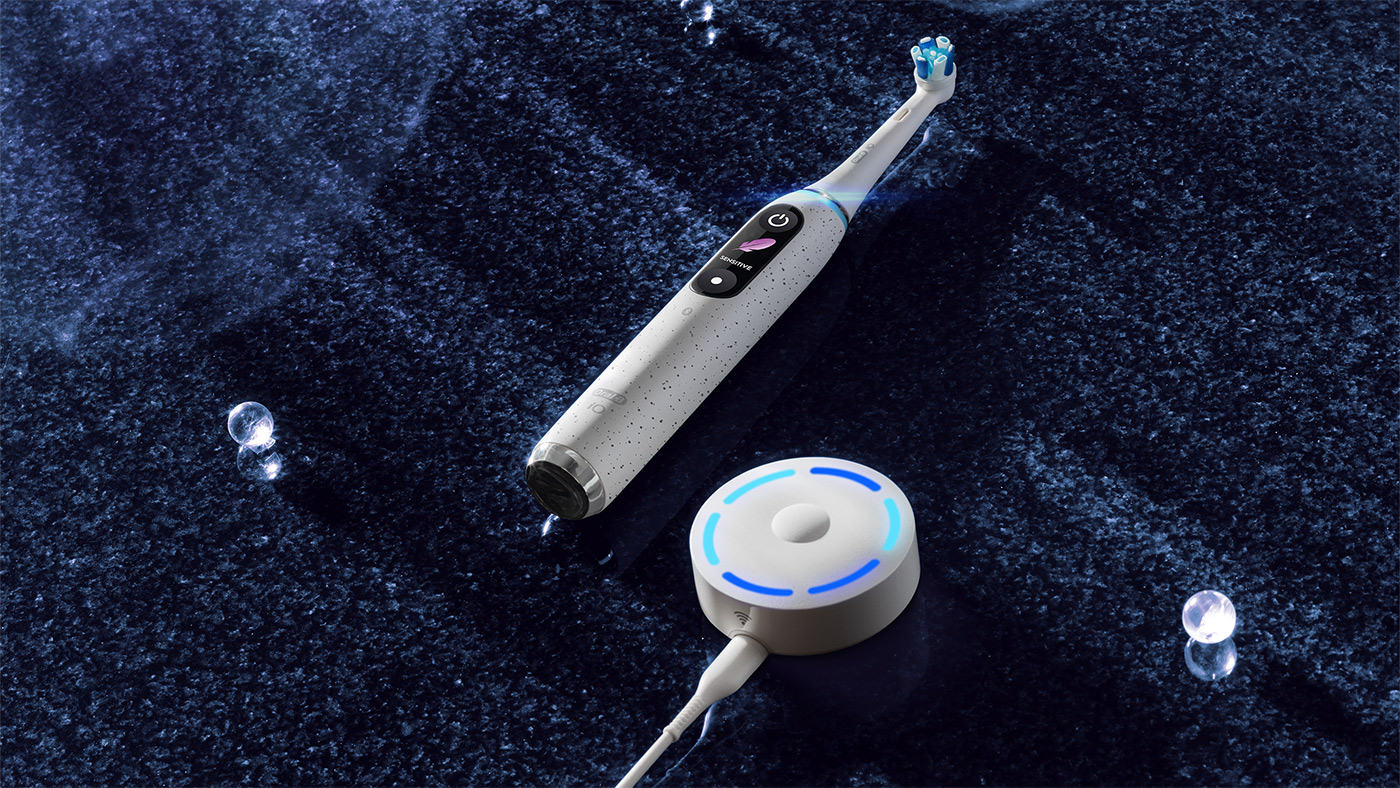
At that time, toothbrushes were mostly used in upper-class environments and were thus made of, for example, silver and ivory, but around 1900 they began to be used by more and more people, when they began to be manufactured more industrially and from cheaper materials, such as plastic. The brand nylon was launched by the company DuPont in 1938 and the material began to be used for toothbrushes in the same year, and it turned out that nylon bristles were significantly better than animal bristles.
The first electric toothbrush was designed in 1954 by Phillippe Guy E Woog in Switzerland, for use by people with mobility impairments. The invention was launched in the United States in 1959 and today electric toothbrushes are manufactured by more than 150 different manufacturers worldwide.
The microwave oven – 1980s
The microwave oven was invented by accident, by the American radar researcher Percy Spencer who in the mid-1940s noticed that a piece of chocolate had melted from the waves of the radar transmitter. He tried other things, made an egg explode and managed to pop popcorn. Spencer patented his invention, and in 1947 the first microwave ovens were on sale – they were 170 cm high and weighed just over 300 kg.
In Sweden, Philips Norrköpingsindustrier AB began producing microwave ovens for professional use in the mid-1960s, and in the late 1970s they also began developing and manufacturing microwave ovens for home use. In the 1980s, microwave ovens for home use really took off and production increased significantly in Norrköping.
In 1989, Whirlpool bought part of Philips Norrköpingsindustrier and the company changed its name to IREMDA. In 1993, Whirlpool took over the business completely and the company changed its name to Whirlpool. Production was later gradually moved from Sweden and in 2014, production in Norrköping was completely closed. Husqvarna also manufactured microwave ovens in Sweden, until 1976 at the factory in Husqvarna.
Text: Ola Larsson