
2022.09.27
Food Waste Day & Coffee Day
Since 2020, World Food Waste Day has been established by the UN and falls on September 29th each year. The same day is Coffee Day in Sweden, but International Coffee Day does not fall until two days later, on October 1st.
As a measure to reduce food waste, the UN in 2020 initiated World Food Waste Day, which is on September 29th every year, worldwide.
Within the government's mandate to reduce food waste, the Swedish National Food Agency works together with the Swedish Environmental Protection Agency and the Swedish Board of Agriculture with activities in connection with Food Waste Day.
This year, the Swedish National Food Agency's communication is about the "food waste mountain" which shows how much food is thrown away unnecessarily. The theme for 2021 was how to best store fruit and vegetables to avoid food waste, and the year before it was about gaining insight into waste through the Swedish National Food Agency's food waste insight coach.
For households, the Swedish Environmental Protection Agency's statistics show that food waste thrown away in the garbage has decreased from 19 kilograms per person per year to 17 kilograms (2018-2020).
– A reduction of two kilograms per person may sound like a small amount, but think about it this way. For the entire population, this actually amounts to around 20,000 tonnes of food that was not thrown away. That is a lot of food that was saved, says Karin Fritz, food waste expert at the Swedish National Food Agency.
In addition, 18 kilograms of food are thrown down the sink per person per year, which is also a reduction compared to before.
Think short-term
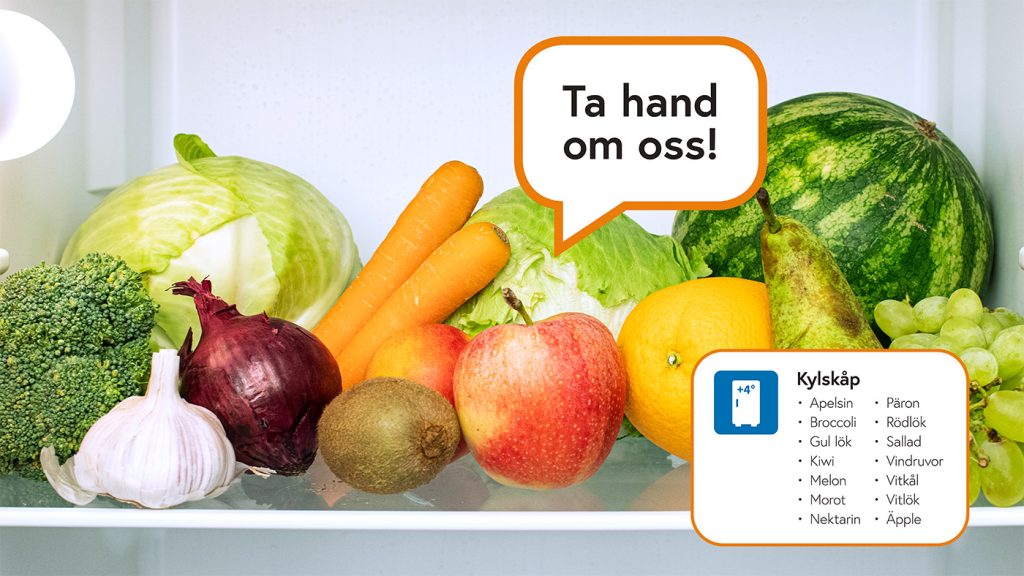
The Swedish National Food Agency informs that fruit and vegetables are the foods that are thrown away the most, and that the secret is of course not buying more than you can eat and to store them correctly, so that they last longer.
They also explain that meat and fish should be put in the refrigerator as soon as possible. The colder they are kept, the longer they will last. Therefore, it is good to leave them in the coldest place in the refrigerator.
On the Swedish National Food Agency's website you can also read that most vegetables and some fruits do best in the cold, and if you are going to store them for a longer period of time, it is therefore a good idea to keep them in the fridge, preferably in the vegetable drawer if there is one.
The vegetable drawer has become "zero zone"”
One way to reduce food waste is to purchase a refrigerator that is equipped with one or more special drawers where the temperature is just above zero degrees. This type of drawer, which has been on the market for many years but has recently received increasing attention, is called a number of different things depending on the manufacturer and functionality, such as Zero Zone Drawer, Activ0, Cool Space Plus, CrispZone, Dynamic 0, FreshZone, hyperFresh, Life plus zone, NaturaFresh, PerfectFresh, SuperFresh, VitaFresh, VitaminCare zone, Zerobox and ZeroZone.
In these zero zone drawers, food stays fresh much longer than in a traditional refrigerator, thanks to the combination of the correct temperature and humidity. In many zero zone drawers, you can easily adjust the humidity yourself, and for example have a drawer for fruit and vegetables with high humidity and a second drawer for fish and meat with low humidity.
For refrigerators and freezers, you should leave the door open for as short a time as possible, keep things organized so you can easily find what you're looking for, and don't put warm leftovers in. If ice forms in the freezer, you should defrost it, as ice means the compressor has to work harder, which uses more electricity.
More tips can be found on the Swedish National Food Administration's website at these links:
Tips for reducing food waste – https://www.livsmedelsverket.se/matvanor-halsa–miljo/matsvinn/tips
Store fruit and vegetables properly – https://www.livsmedelsverket.se/matvanor-halsa–miljo/matsvinn/tips/forvara-frukt-och-gront-ratt
Coffee Day in Sweden
International Coffee Day takes place on October 1st, for how long is a bit unclear, but The All Japan Coffee Association promoted the day for the first time in 1983. However, there are many countries (for example Sweden and Norway) that celebrate coffee day a couple of days earlier, i.e. September 29th.
De'Longhi announces that Swedes are a coffee-loving people and coffee makers are still the most popular, but now there is a trend reversal – 65 percent of Swedes would consider buying a fully automatic coffee machine. This is according to a survey conducted by Tre Kronor Media, on behalf of De'Longhi, in March 2022 among 1,000 Swedes.
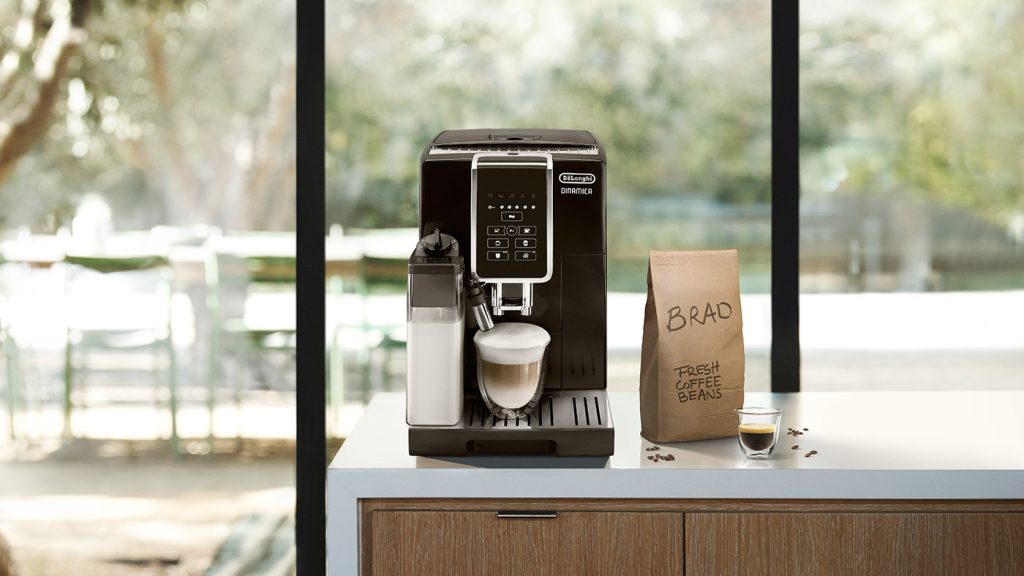
More and more people have bought or are interested in buying fully automatic coffee machines that grind the beans. Every fourth fully automatic coffee machine in our homes was bought less than a year ago and a full 65 percent of Swedes say they would consider buying one.
– Coffee is an important part of Swedish culture and the quality of the coffee we drink has become increasingly important. Interest in fully automatic coffee machines increased during the pandemic when people worked from home and the trend is still ongoing. More and more people appreciate the opportunity for variety, which you get with a fully automatic that grinds the beans and gives you a cup of coffee at the touch of a button, says Jean Baptiste Viton, Senior Product Marketing Manager for De'Longhi Scandinavia.
The survey also shows that 7 out of 10 Swedes think that freshly ground beans make better coffee, which may explain the increased interest in fully automatic coffee makers.
Images: Swedish Food Agency & De'Longhi
Compiled by Ola Larsson