
2022.08.31
Some examples of circularity and sustainability
There's a lot happening in circularity and sustainability, and here are three examples from this summer. Electrolux has introduced a new product recycling tool, Dometic has switched to renewable electricity at its facilities, and Elektroskandia talks about its sustainability work in Volt.
Electrolux has introduced a new product recycling tool, and this year will expand the studies on product circularity – which they have carried out in collaboration with Stena Recycling in vacuum cleaners – to cover all their major product categories. Dometic has announced that all their production facilities in Europe are now powered by renewable electricity, and Elektroskandia has reported on its work on sustainability issues in its magazine Volt.
Electrolux
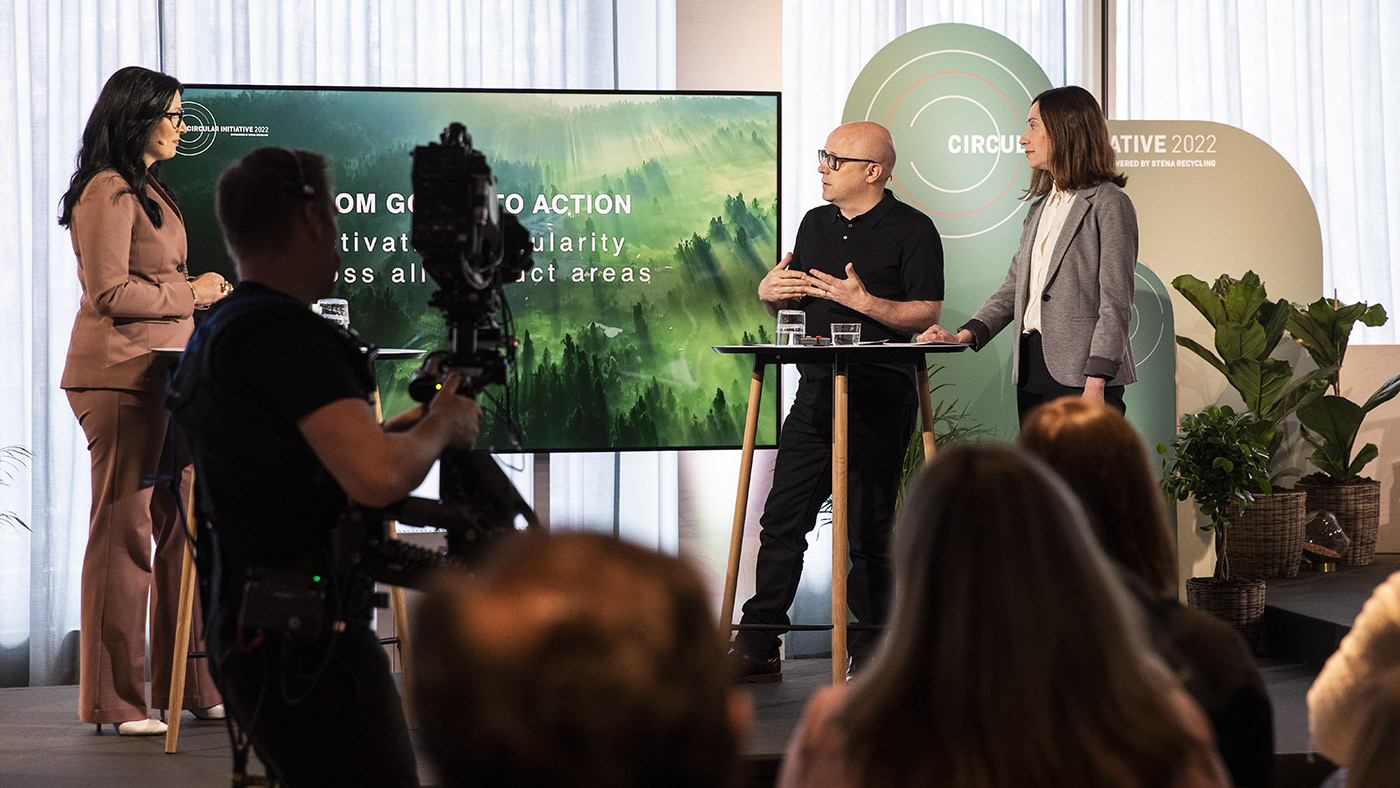
Electrolux has introduced a new product recycling tool. The prototype tool, presented in May at the Circular Initiative event in Stockholm, builds on the knowledge gathered during the company's ongoing collaboration with Stena Recycling to explore circular solutions.
Today's consumers are demanding circular materials, Electrolux announces, and says that according to a recent European survey conducted by Stena Recycling, 77 percent of consumers believe that it is important or very important that products are recyclable.
“The tool will enable our design and engineering teams to explore recyclability from the very beginning of the design process so that we can create products that are even more recyclable – so that their components can continue their lives as useful materials. The tool is still in the early stages of development and the next step for us will be to open the process to other companies and work together to expand its functionality, data quality and market relevance,” says Vanessa Butani, VP Group Sustainability at Electrolux.
“Collaborating with others means they can use our lessons learned to create their own more recyclable products while together we can support a growing market for circular materials,” says Barry Waddilove, Sustainability Director Development & Collaborations at Electrolux.
Over the past three years, Electrolux has worked closely with Stena Recycling to understand what happens to products at the end of their life and how they can improve product circularity. In 2020, the partnership developed a prototype vacuum cleaner made from 100 percent recycled materials and reused components, and in 2021, a prototype vacuum cleaner that is 90 percent recyclable.
“Our in-depth research into the vacuum cleaner category has been particularly useful in understanding our material choices and design decisions that benefit both quality and recyclability. In 2022, we will expand these studies to all of our major product categories including dishwashers, refrigerators and stoves,” says Barry Waddilove.

Dometic
Dometic announced in May that it had entered the next phase of implementing its sustainability strategy, with all production sites in Europe now powered by 100 percent renewable electricity. This represents a reduction in emissions equivalent to the emissions of approximately 1,000 passenger cars for a year, the company said, adding that by offering innovative, sustainable products with a low climate impact that inspire an active, comfortable and responsible outdoor life, Dometic is contributing to a more sustainable world and enabling people to enjoy and explore nature – locally and more often.
Energy consumption in manufacturing and use has long been key to environmental goals that help reduce the climate impact of mobile living. One of the new goals in the new program is to run production facilities entirely on renewable electricity, and the goal for 2030 is to reduce CO2 emissions by 50 percent in relation to net sales.
Efforts continue to find a solution to power all production facilities globally with renewable electricity, the company announced.
Electroskandia/Cylinda
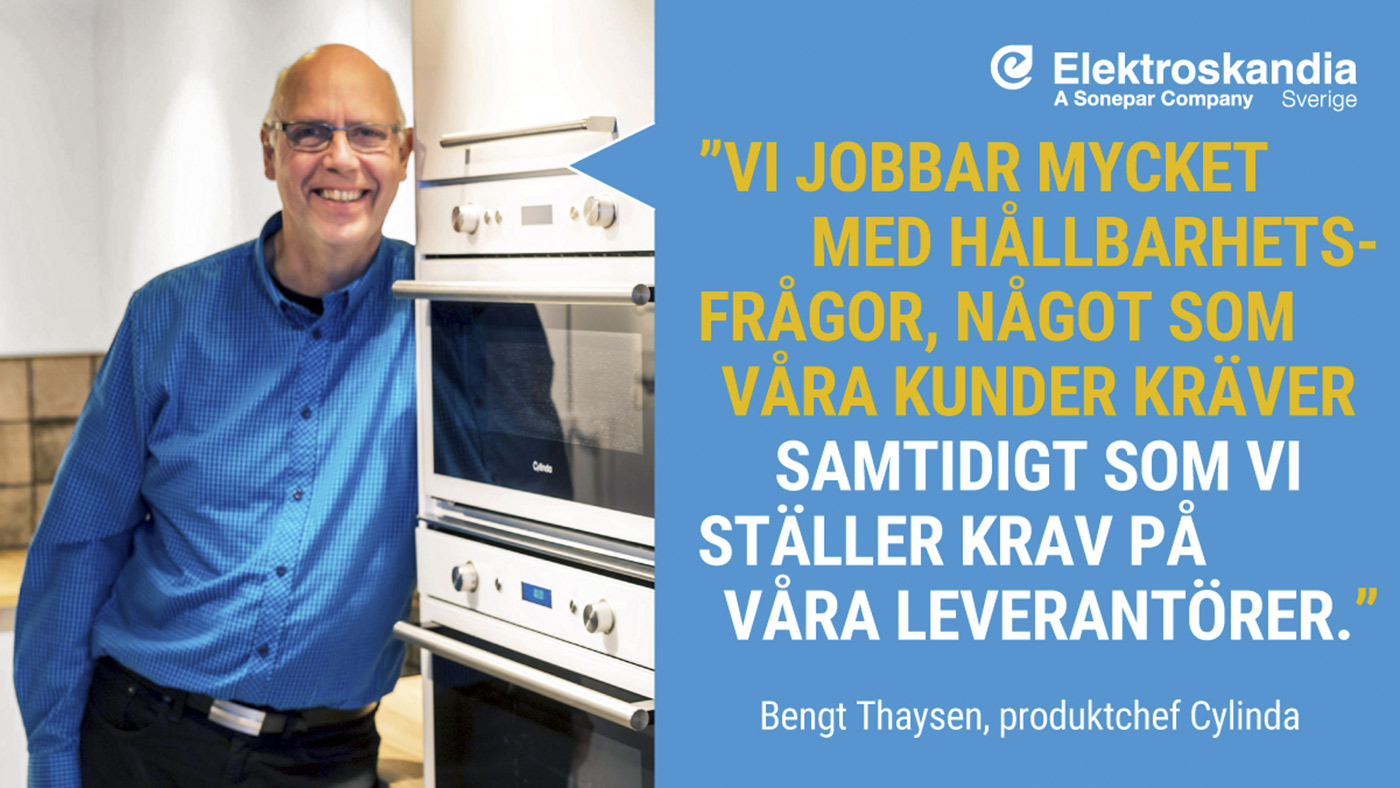
In an article titled "Sustainable white goods" in Elektroskandia's magazine Volt 6/2022, which can be read in full below, Elektroskandia talks about how their sales of white goods work, and Bengt Thaysen, product manager Cylinda, talks about the work on sustainability issues and what rules and laws apply.
Elektroskandia's sales of white goods are offered under the Cylinda brand, which is developed and produced primarily through European OEM (Original Equipment Manufacturer) producers. Cylinda's five main suppliers are leading suppliers and producers of white goods products under its own brand with OEM production in Europe and in other markets around the world.
Production and purchasing are primarily from EU countries and Turkey. All of Cylinda's suppliers are required to comply with EU laws and regulations regarding production, development, energy requirements and safety. All Cylinda's products are CE marked, which means that the product complies with the RoHS II directive.
We asked Bengt Thaysen, product manager at Cylinda, to tell us a little more about the work on sustainability issues and what rules and laws apply.
– We work a lot with sustainability issues, something that our customers demand, while at the same time we place demands on our suppliers. Sustainability work involves a lot of reporting and last year we hired Emma Edvinsson as product coordinator. Her role includes being our environmental watchdog and reporting to various databases and organizations. We report continuously to El-Kretsen, the SCIP database, the Chemical Tax and the Building Products Assessment, says Bengt Thaysen and continues:
– It is a legal requirement that as a producer of consumer electronics you must be part of an approved collection system, label the products and provide information to end consumers on how the product should be recycled. For every white goods we sell, we pay a certain amount to El-Kretsen, which is included in the REPA register, which ensures that the white goods are destroyed at our recycling centres. We report every month on how many products we have sold.
– Last year, the law on reporting the presence of particularly hazardous substances in a product to the European SCIP database was introduced. The rule is contained in the EU Waste Directive and aims to reduce the proportion of waste containing particularly hazardous substances and promote substitution.
– The chemicals tax is a special excise tax on white goods and other electronics. The tax is calculated based on the weight of the product and depending on how much hazardous substances it contains. If you can prove that there is a smaller amount of hazardous substances in the product, the tax is reduced. On the vast majority of our products, we only need to pay 50 percent of the chemicals tax and on some products we get as much as 90 percent in tax reduction. Lower chemicals tax means that we can keep the prices of the products lower. In other words, a win for both the environment and the customers.
– We also make product declarations on many products for the Swedish Construction Product Assessment. The Swedish Construction Product Assessment assesses construction-related products based on their chemical content, environmental impact during the life cycle and, by extension, social impact in the supply chain. The Swedish Construction Product Assessment is used by an increasing number of construction and real estate companies, in order to be able to build the best possible houses in terms of sustainability.
Translated and compiled by Ola Larsson