
2022.01.26
Sous vide – under vacuum
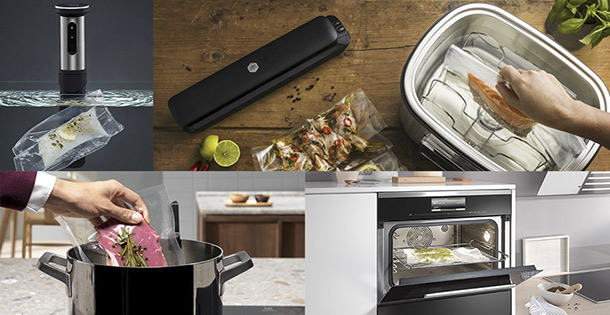
Sous vide is French and means ”under vacuum.” The full name is méthode sous-vide, which is a method of cooking vacuum-packed ingredients, which involves cooking the food in an airtight bag that has been sealed under vacuum and is placed in a water bath or steam oven during cooking.
Today there are a number of products, in different price ranges and with different designs, for cooking at carefully controlled temperatures, which are often called ”Sous vide machines” which is actually incorrect since a Sous vide machine is a vacuum packer. The cooking machines should be called circulators and originate from laboratories.
It is probably the case that many people still think that Sous vide is only for professional chefs and food enthusiasts, but it is actually very useful for most people at home in everyday life. The use is very simple and practical, the food can be prepared in advance and left in the fridge until you are ready to use it. Vacuum-packed food also stays fresh up to five times longer than food in regular packaging. After that, it is quick to cook – of course, depending on what is being cooked and how.
One advantage of Sous vide is that the inside and outside of the food get the same temperature, another advantage is that no evaporation of beneficial substances occurs. A disadvantage is that there is no frying surface, which is why, for example, meat that has been cooked for a long time with the Sous vide method, in order to become very tender even though it may still be pink, should be turned on a frying pan or grilled to get a frying surface.
Today, there are a large number of vacuum sealers on the Swedish market - separate or for installation under the oven - and Sous vide products that are placed on the edge of a pot/cassette, complete cooking machines (circulators) as well as induction hobs and steam ovens that can be used for Sous vide cooking.
According to Wikipedia, the Sous vide method was developed by Georges Pralus in the 1970s for the Troisgros restaurant in Roanne, France, when he discovered that foie gras cooked in this way retained its original shape and texture.
Ola Larsson