

2022.12.13
The buzzword for 2022 is RESTART
I think all of us feel that 2022 was a year filled with 'restarts' after several years of pandemic management. The year began with a restart of the CES trade fair in Las Vegas, which succeeded in organizing a functioning hybrid trade fair for all international stakeholders in white goods and home electronics. In Sweden, NORD-BYGG restarted a physical trade fair in Älvsjö in April with several of APPLiA's member companies as exhibitors and lots of happy visitors.
Afterwards, ELON drew large crowds of store staff from all over the Nordic region to Örebro to visit ELON Expo, which was organized between May 31 and June 3. The trade fair year was then crowned by a fully restarted IFA trade fair in Berlin from September 2-6 with large crowds of visitors in an international environment in the capital of currywurst.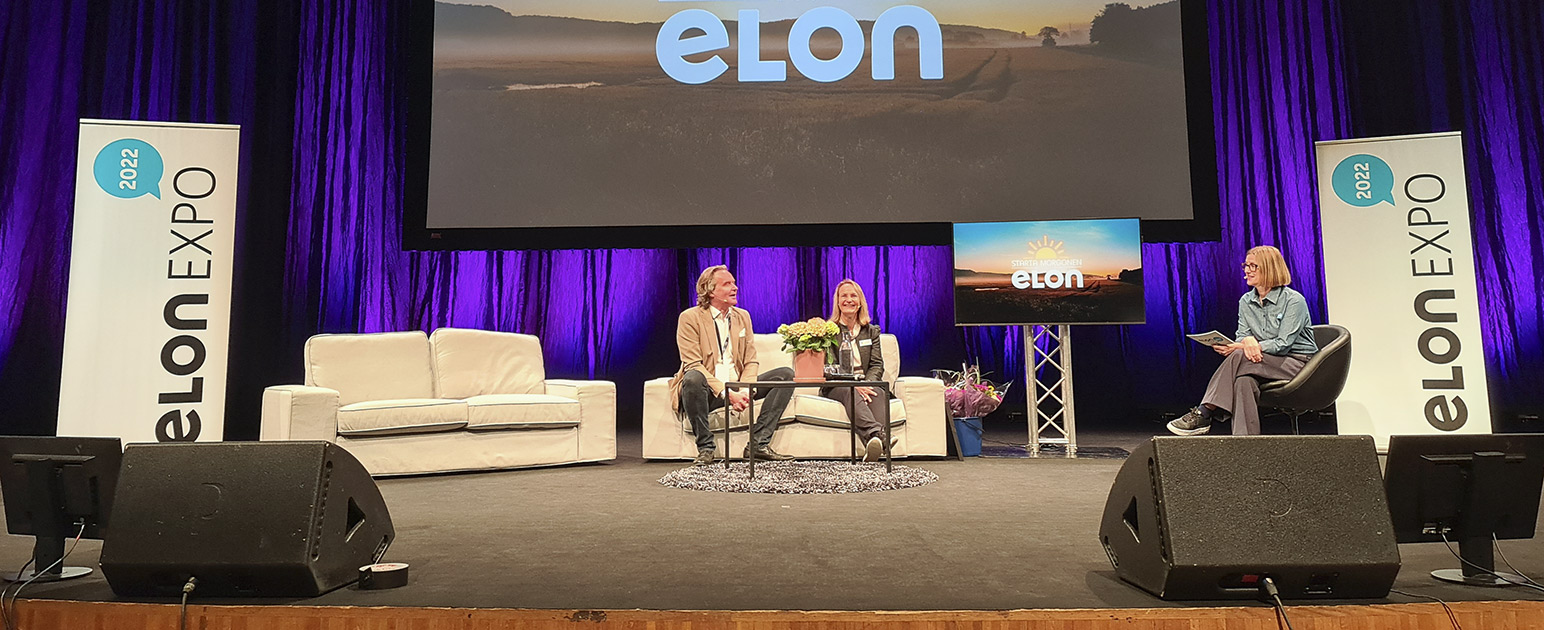
All of these trade fairs have had a greater element of digital meetings than before, which can be followed remotely. That is the not entirely unimportant lesson we have all taken with us from the pandemic years.
More restarts
But it wasn't just the trade fair front that was restarted. The member companies also contributed to a long-awaited restart of larger customer meetings and grand product presentations. Many remember, for example, Smeg's grand introduction of its new Galileio series of built-in ovens at the Fotografiska Muséet in Stockholm on March 31.
The Swedish Customs also seems to have had a reboot when, during a few weeks in September, they significantly increased their efforts to stop the export of what is called environmentally hazardous waste – for example, used compressors, white goods and home electronics. APPLiAnytt was previously able to report on this effort. Discarded household appliances – exported illegally – APPLiA and then stated that Customs is twice as effective this year in stopping these illegal exports to mainly African and Asian countries than in previous years. Since we in Sweden have a much better system for recycling these end-of-life goods, it is still important for Customs to 'drive hard' and close the loopholes in the border in case of unauthorized exports!
Restart in law
In the legal area, new laws have also been introduced during the year with relevance to the industry. The new Consumer Purchase Act (KKL), which came into force on 1 May, meant an increased commitment regarding the burden of proof for the seller to take into account in the event of complaints. APPLiA has adjusted the industry regulations accordingly and the new texts are currently being processed by the Swedish Consumer Agency in order to be presented in full next. Read more here:
On July 25, the Swedish Energy Agency received increased legal support for strengthened supervision of the EcoDesign Directive among companies. As a control authority, they now have greater opportunities to carry out practical supervision at companies and sellers. This is to prevent substandard products from unscrupulous actors from spreading on the market.
Energy saving restart
As energy price shocks have struck several times during the year, it is not surprising that tips and advice on energy savings have been on the back burner! The Energy Agency has launched a broad national campaign to get us all to save energy – ”every watt counts” – and the media is filled with all sorts of tips on how to reduce your electricity consumption. And the government held a press conference last week to emphasize the seriousness of the situation.
Interest in the Energy Label for white goods and other products has therefore 'restarted' and has attracted increasing interest at the time of purchase. Questions about energy consumption are the most frequently asked questions by customers in stores when it comes to new purchases of white goods. Everyone knows that, for example, new refrigerators and freezers have a significantly lower energy consumption than older ones that are to be replaced at home and can therefore constitute an important component in the kW hunt in households and now customers want to be sure of getting the products that have the best energy values.
Has politics also started anew?
We saw a possible new start around the political issues that have been the hottest for the industry in 2022, i.e. the issue of the electronics tax. Before the new government had even taken office, the Riksdag voted NO to further annual increases in the electronics tax with an over-indexation of 2 percent. Hope therefore rose and one could sense a desire to abolish this ineffective tax altogether among the newly elected politicians. But no then. Instead, an old revived proposal from the previous S and MP government came out of Tidö Slott, which will now fundamentally change the system for the electronics tax.
The proposal means that from 1 July 2023, no consideration will be given to HOW the flame retardant in electronics etc. has been added (additively or reactively). This is despite the fact that science prefers reactively added substances, which pose a lower risk in homes than additively added substances. The change is good for the authorities that are responsible for carrying out checks (Tax and Customs) BUT since the right to deduct for reactively added flame retardants is now lost, the tax levy for suppliers and warehouse keepers is de facto increased significantly.
Restart for increased tax collection
APPLiA calculates that payments to the electronics tax will thus increase by in the order of over 300 million kronor for the white goods segment alone. In addition, there are IT, TV, Games, mobile phones, etc. where the situation is similar. This corresponds to an increase in tax collection by a full 50 percent on an annual basis – and that is not OK. The tax is still counterproductive for environmental work and must be replaced by real measures that can have an effect throughout the EU area. And furthermore, the government claims in the proposal that this 'change in the tax should not mean an increase in tax collection'. But it does – by over 50 percent – which gives inflation a boost!
Rare goods trade 2023 – restart?
Most people predict that consumers will be more restrained in their consumption in 2023. And unfortunately, it does not look like the retail trade in durable goods will restart in a big way next year. The Swedish Trade Research Institute (HUI) is adjusting its forecast for the retail trade in durable goods in 2023 downwards. From a previous zero growth to now minus three percent in current prices. In 2024, the situation looks to stabilize somewhat in the form of zero growth, according to the forecast.
In a press release from HUI, Emma Hernell, CEO of HUI Research, comments on this:
– Sales development is expected to decline most in capital-intensive industries connected to the home where interest rate increases have the greatest effect on consumption, such as the building materials trade, the furniture and home furnishings trade, and the electronics trade.
So just bite the bullet and look ahead – 2022 will soon be history and 2023 will be filled with partly new buzzwords. Still, there is a possibility that the word 'restart' will live on – but then in the sense that the economy will hopefully turn upwards again! "To be continued", as they say in the TV series industry!
Kent Oderud, Chairman of Applia