
2022.10.04
Energy savings for winter – tips for households
Energy consumption is in constant focus and right now we are faced with advice on a daily basis on how to save both electricity and money. APPLiA has taken a closer look at energy labels and how many kronor households can save annually by investing in appliances with energy label A.
A general tip for reducing electricity consumption is to think about heating. If you live in a house, you should make sure that the roof is well insulated and the windows are tight, while the ventilation is good. This will prevent unnecessary heat from leaking out of the house and the temperature can be lowered on the heating system. In addition, the degrees can be lowered further if an extra sweater is put on.
Other tips include replacing all light bulbs with LED and taking quick showers, as hot water is a relatively large expense. For the same reason, you should avoid washing dishes by hand and instead use the dishwasher, which should always be full before starting.
If you have an electricity contract with an hourly rate, you can influence your electricity costs by controlling your consumption to the hours of the day when fewer people use electricity and the price drops. Many dishwashers and washing machines can be easily programmed to start at a specific time – preferably so that you don't have to get up and hang out laundry in the middle of the night – and if you are going to cook a lot of food and freeze it, you can use the oven and hob at a time when the price is lowest.
However, if you have a traditional electricity contract, with the same price around the clock, you should consider minimizing the time you use products that draw a lot of power.
Energy labelling & other tools
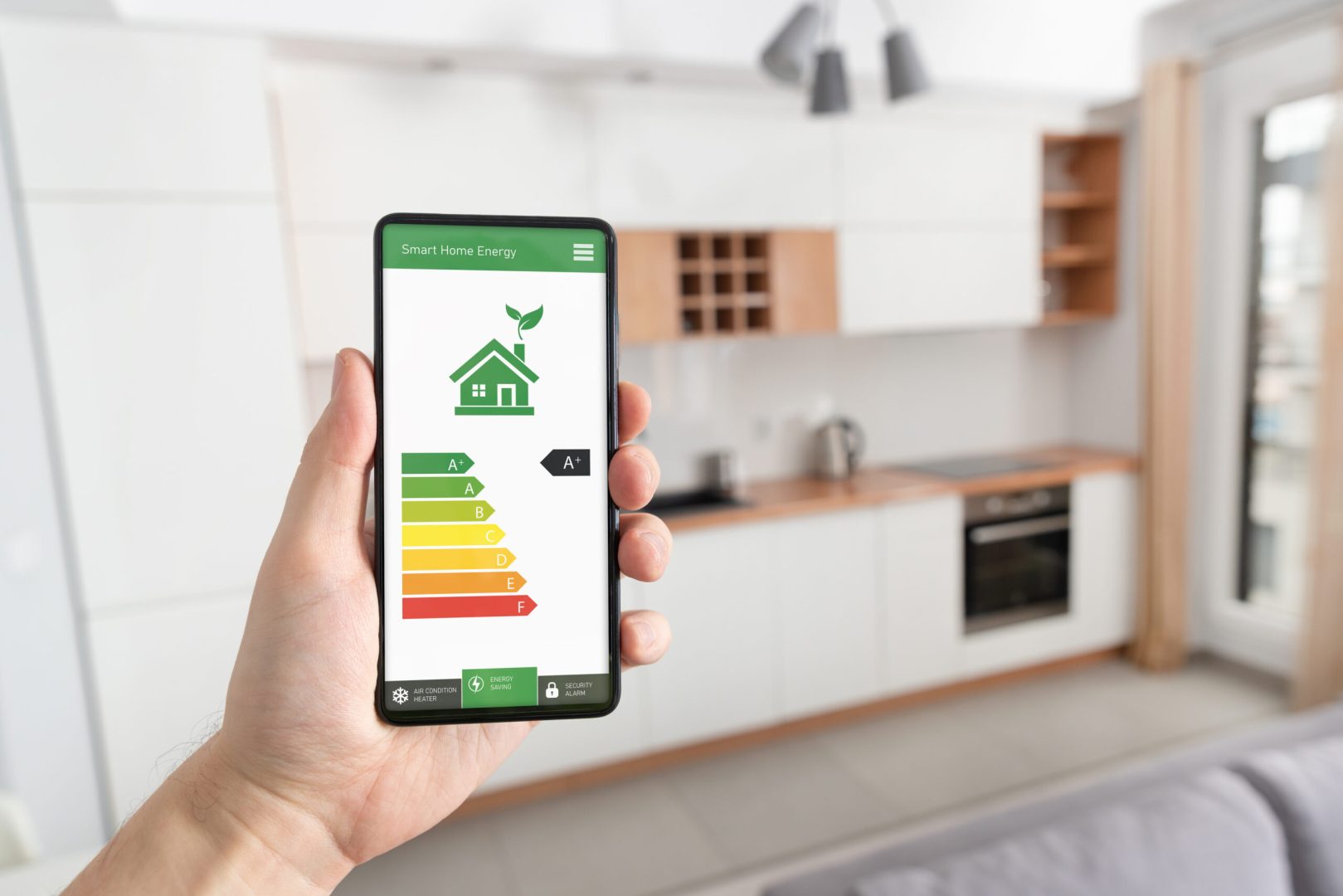
For more than 25 years, energy labelling has helped consumers make energy-smart choices. When the Swedish Energy Agency's consumer surveys showed that the majority of consumers find it difficult to read and understand the concepts and symbols on the label, they carried out a campaign this summer to clarify the concepts on the energy labelling label.
It is important for consumers to think long-term when purchasing new products. Reading and understanding the energy label can be a way to help consumers choose an efficient product. What many people don't know is that the label indicates more than just energy use.
“The label not only shows energy use, but you can, for example, see whether a dishwasher is quiet and how long it takes to wash in the washing machine,” says Helena Holm, project manager at the Swedish Energy Agency.
In connection with the campaign, the following was also launched: Product calculation, a tool for comparing products and making more conscious and informed choices. Among the products that can now be compared are dishwashers, washing machines and combined washer-dryers, refrigerators and freezers and wine coolers. Searches can be made by brand or product name or by scanning the QR code on the label. There is also a calculation model to see if a cheap model is really cheaper by analyzing product data and calculating the operating cost. The product calculation was developed within the EU project Label 2020 and uses data from the product database, EPREL.
APPLiA are pioneers in sustainability
APPLiA was one of the pioneers in sustainability work in the late 1990s and created an environmental declaration about the content of the products. In 1998-2000, APPLiA, together with the Swedish Energy Agency and retailers, carried out a joint campaign for energy labelling for consumers. The energy label is today found on many products in several different industries. The energy label is an easy way for consumers to compare products from an energy point of view when purchasing.
– It has become clear to consumers that through the label they can make an active choice to reduce their own energy consumption by choosing energy-efficient products. Within the framework of the industry's own statistics, we continuously see how consumers have chosen energy-efficient products, which we inform about annually, says Matts Spångberg, CEO of APPLiA.
Many kronor to save
We usually replace our appliances either when they break down – often after long and faithful service – or when we renovate our homes. But with electricity prices having increased significantly recently, and also likely to remain at a high level for the foreseeable future, it could be a smart investment to take the opportunity to replace one or more appliances in your home this autumn. Most people know that it is wise to choose a product with an energy label A, but how many people know how many kronor you can save per year if you, for example, choose an A-rated fridge/freezer instead of an F-rated one?
APPLiA has compared a fridge/freezer with an energy label of A* with a corresponding product with an energy label of F** and can conclude that the total savings in electricity costs over 12 years exceeds SEK 5,000, calculated with an electricity price of 232 öre/kWh, provided that the product is in continuous operation. The savings therefore increase if the electricity price increases.
However, the Swedish Energy Agency's product calculation does not take into account spot surcharges, electricity certificate costs, VAT, electricity network fees and energy tax. The real cost is therefore higher for both products and the price difference between the two fridges/freezers is even more significant over a twelve-year period.
Text: Ola Larsson
*Energy rating A
Average annual energy consumption of 104 kWh and 363 liter volume
**Energy label F
Average annual energy consumption of 286 kWh and 267 liters volume