
2022.10.19
Do you know the washing instructions?
Did you know that the well-known washing symbols on all clothing items are international and trademarked? This means that a license is required to use them. In Sweden, the license is included in membership in the industry organization TEKO – Swedish Textile and Fashion Association.
— Correct labeling of textile products is extremely important and the companies that put a product on the market are responsible for the labeling. In addition to fiber, care, and origin labeling, there are various environmental labels and certificates. But perhaps the most important labeling on a garment is the washing symbols, Ginetex, says Anna, project manager at TEKO.
The symbols indicate the harshest treatment a garment can withstand. In other words, it is possible to wash them at lower temperatures or more gently without compromising quality or fit. The care symbols and the system for how they should be used were developed by the organization Ginetex – the International Association for Textile Care Labelling. The first symbols originated in the 1960s and since then, most symbols have been added to the care system.
The five most common symbols and the clevercare logo are registered trademarks through WIPI, the World Intellectual Property Organization.
— Ginetex defines and coordinates the system for the care symbols at an international level. This ensures that the system for symbol use is updated with the latest technical solutions. Since 2014, TEKO has been a national member of Ginetex for Sweden. This means that the license required to use all the symbols, the clevercare logo in the world, is signed with us, says Anna.
The meaning of the symbols
The washing symbol indicates whether home washing is possible or not and applies to both machine and hand washing. The numbers in the tub indicate the highest degree the textile can withstand and should not be exceeded. A line under the tub indicates a gentle washing program with reduced mechanical action (e.g. ”gentle wash”). Two lines under the tub indicate a very gentle washing program (e.g. wool program).
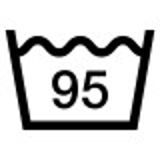 Machine wash, Items made of e.g. cotton or linen, white, suitable for washing at very high temperatures, coloured or printed. Fill the machine completely. Set the appropriate washing programme (normal washing programme). Pre-treat stubborn stains
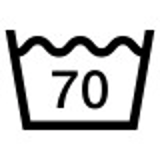 Machine wash, Items made of e.g. cotton or linen, white, suitable for washing at very high temperatures, coloured or printed. Fill the machine completely. Set the appropriate washing programme (normal washing programme). Pre-treat stubborn stains. Energy-saving method.
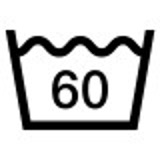 Machine wash, Colored items that are not suitable for washing at very high temperatures, such as cotton, modal, polyester and mixed fibers
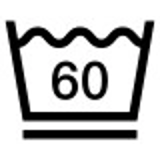 Machine wash, delicate wash, coloured wash: reduce the amount of laundry (in the machine). The drum must not be more than two-thirds full. Set the appropriate washing programme (delicate wash). Only prewash if the textiles are very dirty. Avoid spinning or spin for short periods only to avoid creasing the textiles.
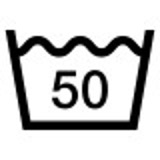 Machine wash, Colored items that are not suitable for washing at very high temperatures, e.g. cotton, modal, polyester and mixed fibers. Energy-saving method.
 Machine wash, delicate wash, coloured wash: reduce the amount of laundry (in the machine). The drum must not be more than two-thirds full. Set the appropriate washing programme (delicate wash). Prewash only if the textiles are very dirty. Avoid spinning or spin only for short periods to avoid creasing the textiles. Energy-saving method.
 Machine wash, Washing program for, for example, dark colored items made of cotton, polyester, mixed fibers, etc.
 Clean laundry, Delicates, e.g. modal, viscose, synthetic fibres (acrylic, polyester, polyamide). Reduce the amount of laundry (in the machine). Select the appropriate washing programme. Prewash only heavily soiled textiles. Avoid spinning or spin for shorter periods only to avoid creasing the textiles.
 Very gentle washing, For items made of, for example, machine-washable wool. This washing program provides a much reduced mechanical treatment. Reduce the amount of laundry considerably (in the machine). The drum should not be filled more than one third. Select the appropriate washing program.
 Delicates Washing program for e.g. dark colored items made of cotton, polyester, mixed fibers. Select the appropriate washing program.
 Gentle delicate wash For items made of, for example, modal, viscose, acrylic, polyester and polyamide. Reduce the amount of laundry (in the machine). Select the appropriate washing program. Avoid spinning or spin only for short periods to reduce the risk of the textiles creasing.
 Very gentle delicate wash, Items made of, for example, machine-washable wool. This washing program provides a very reduced mechanical treatment. Reduce the amount of laundry considerably (in the machine). Select the appropriate washing program.
 Handwash, Hand wash at a temperature between 30° C and 40° C depending on the item. First dissolve the mild detergent in plenty of water. Let the textiles float in the soap solution and shake gently. Do not scrub, pull or wring the textiles. Then rinse the textiles well, gently squeeze out excess water and gently pull to the correct shape. Treat colored and delicate items promptly and do not leave them soaking.
 Do not wash, Items marked with this symbol should not be washed. They may be sensitive to any type of wet treatment or unsuitable for home washing due to their size.
Source: TEKO
Text: Ellenor Österberg