
2022.10.11
Discarded household appliances – exported illegally
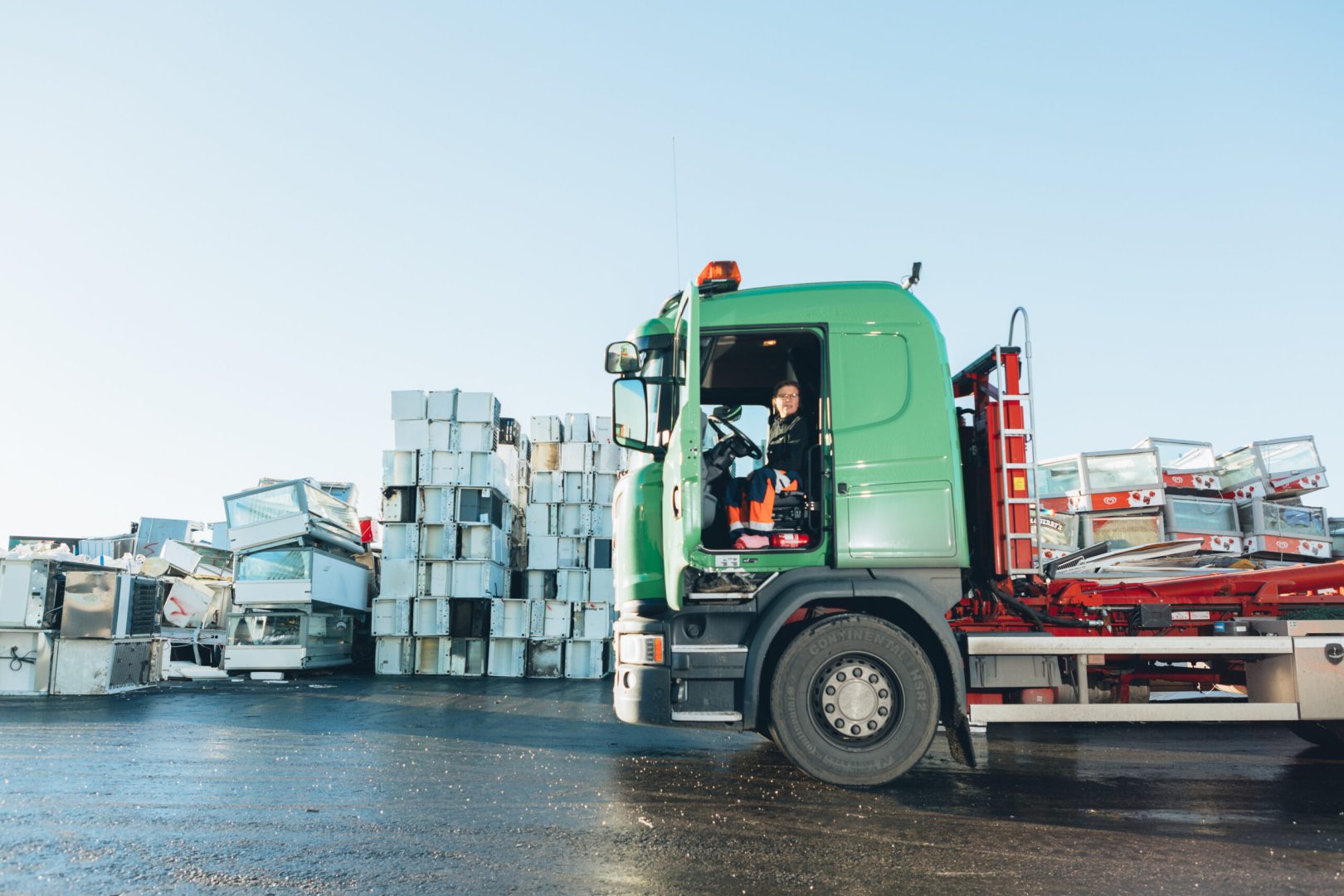
The number of seized white goods that are illegally being exported from Sweden is increasing, according to the Swedish Customs' latest report. Now both the industry and the authority are taking further action to stop the export of environmentally hazardous waste.
Already in the Swedish Customs' annual report for 2021, we could see that customs has become more keen on finding and preventing the unauthorized export of environmentally hazardous waste to other countries. This concerns white goods, refrigeration compressors, electronics, but also end-of-life car parts and machinery. These end-of-life goods are illegal to export to other countries. Sweden has very well-functioning systems for environmentally sound recycling, so exports to less scrupulous countries are only made for economic reasons.
Customs getting better
During the full year of 2021, the Swedish Customs stopped illegal exports of 627 tons of environmentally hazardous waste. The year before that, the figure was 570 tons, which means that the amount of illegal waste prevented from leaving Sweden last year increased by ten percent, according to the Swedish Customs' own statistics. So far this year, customs have already stopped 732 tons of hazardous waste from being exported - a clear increase from last year. If this trend continues throughout the year, the amount will exceed 1,000 tons this year.
– We have stopped more unauthorized waste in our controls, but whether it is being exported more or whether we have become more efficient is difficult to say. There is still too little evidence to draw such conclusions, says Martin Johansson, an expert at the Swedish Customs in Gothenburg to the media.
The recipient of the unauthorized waste is often in African countries such as Benin, Gambia, Ghana and other West African countries, but also in Asia, the Swedish Customs reports.
Special operations by customs
In Dagens Nyheter this week we were able to read about the very latest operation from customs that took place during a week in September when the Swedish Customs and the county administrative boards carried out targeted checks in Sweden's ports - and stopped over 220 tons of environmentally hazardous waste from being illegally exported. The containers contained, among other things, refrigeration compressors, plastic waste and furniture. The operation was carried out in line with the EU ban on the export of hazardous waste to countries outside the Union.
During one of the 472 inspections carried out in Swedish ports by Swedish Customs in September, six containers of used refrigeration compressors with final destination Pakistan were intercepted. The cargo of these compressors weighed a total of 167 tonnes and was the largest of the detected smuggling attempts. A total of ten export bans were issued during the Customs' special operation against shipments from the ports of Gothenburg, Helsingborg and Södertälje to Pakistan, India, the United Arab Emirates, Cameroon and Guinea.
– The Swedish Customs has an important task in preventing such prohibited waste exports. The shipments can pose a serious threat to health and the environment in the recipient countries, comments Martin Johansson in the Swedish Customs press release.
APPLiA supports the Swedish Customs
Industry organizations have pointed out that measures must be taken to prevent this illegal export of used electronics and household appliances.
– Among other things, we help with special checklists to make it easier to check the function of refrigerators and other white goods that are to be exported. It is important for customs personnel to be able to distinguish whether the white goods are working and therefore can be exported, or if they are worn out and without function and therefore illegal to export, says Matts Spångberg, industry manager at APPLiA.
The systems that we have in Sweden for collecting end-of-life materials at over 600 recycling centers and also 1.5 million property-based collection points and environmentally sound recycling in 30 recycling facilities are world-class and it would be very unfortunate if end-of-life materials were instead burdened by countries with poorer conditions for environmentally sound recycling. Therefore, the Swedish Customs Administration's strengthened ambitions in this area are welcomed by the industry.
//Kent Oderud, chairman of APPLiA