
2023.11.22
Products for robots in the home of the future
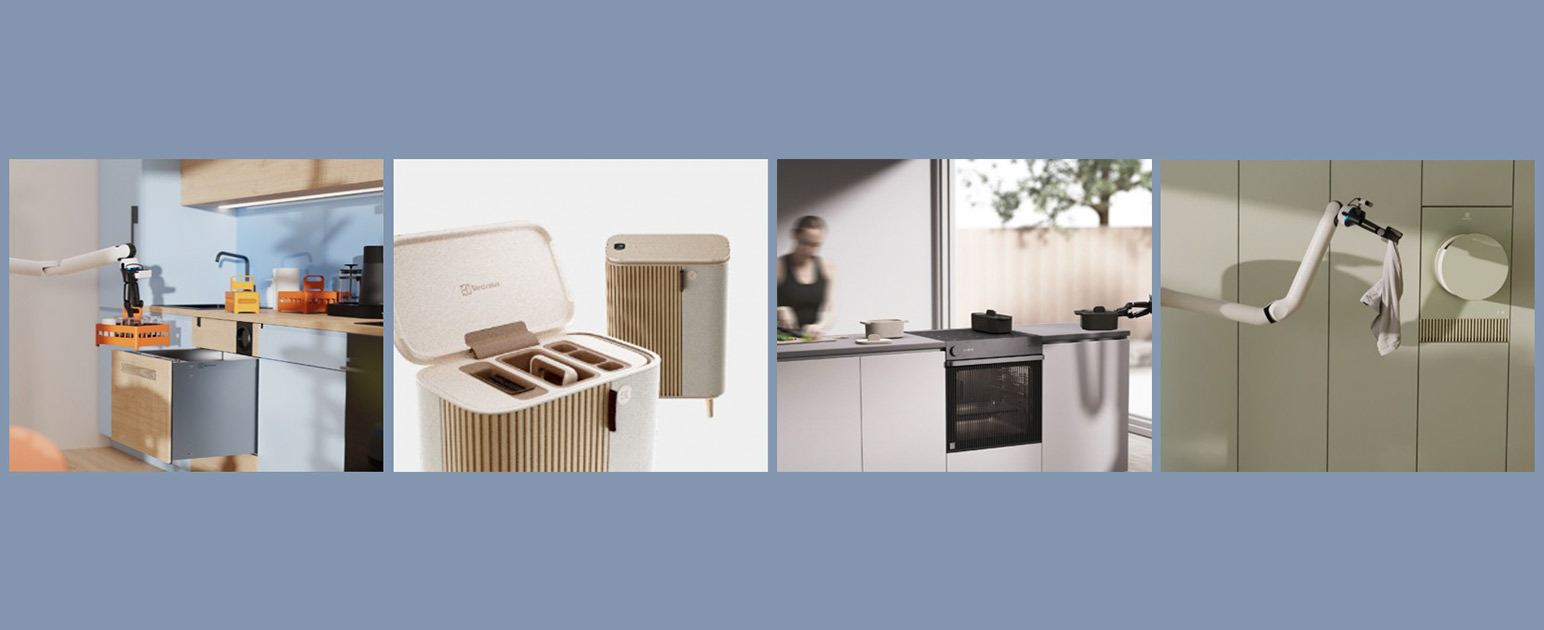
For the sixth year in a row, Electrolux Group has collaborated with students from Umeå Institute of Design (UID) in Sweden to develop product ideas for the home of the future. This year's assignment was to imagine appliances for a home assistant robot as the primary user, and people with different needs as owners.
“As we look to the future, we know that robots will play a greater role in all of our lives. This presents a fascinating opportunity to explore how we can design home appliances for personal robots to use to help consumers who are facing challenges. We were pleased that the students’ ideas solved challenges faced by their target user group, but also emerged solutions that a wide range of consumers would appreciate and even enjoy,” says Thomas Johansson, Design Director, Dish Care, Business Area Europe, Electrolux Group.
The students explored what new solutions and product designs would be appropriate if cleaning, cooking, washing dishes and laundry were performed primarily by robots and secondarily by humans. They designed for a variety of consumers, such as the visually impaired, elderly couples with limited mobility and elderly people living alone. Below are four of the students' ideas.
Tray Flex Assist
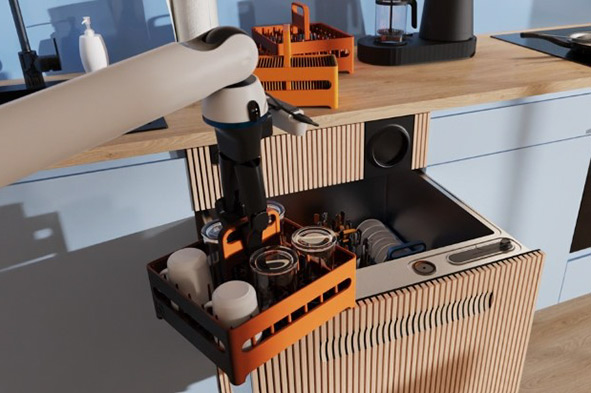
Tray Flex Assist is a robotic dishwasher solution that assists a blind consumer. The robot carries plates, glasses and cutlery to and from the table in trays with a handle at the top.
The trays – in high-contrast colors for the visually impaired – can be placed directly in the dishwasher. The dishwasher, which is voice-controlled, has an opening where the robot can place its hand to be washed with a silicone brush.
Sent
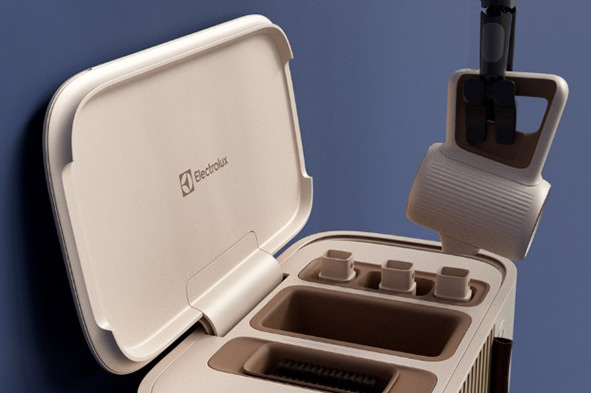
Senti envisioned the robot vacuuming hard-to-reach areas for the elderly, who would clean together with the robot in their home as a way to stay active.
The robot lifts the vacuum cleaner and accessories from a docking station, and cleans according to instructions via the app. The robot returns the vacuum cleaner to its docking station, empties the dust and cleans the accessories.
Atmosphere
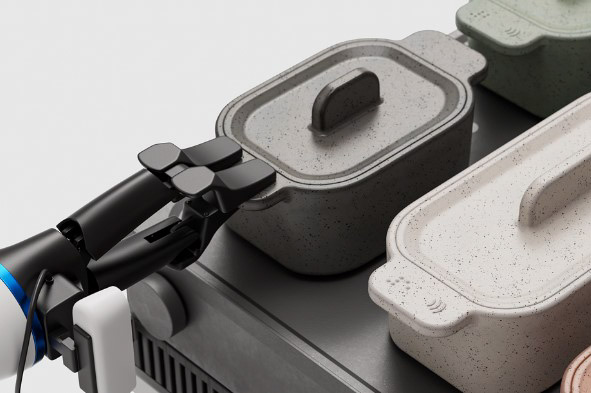
Atmos aims to reduce the dangers and make the cooking process easier with the help of a robot that assists a blind consumer. The team designed a hob with a set of holes in the top to release steam or heat – but only when one of the custom pots is placed on top of it.
Steaming and air frying are possible on the stovetop. The rectangular pans have four high-contrast colors and tactile markings. The robot also delivers them to the table and back again. The consumer can control everything via voice commands.
Autocare
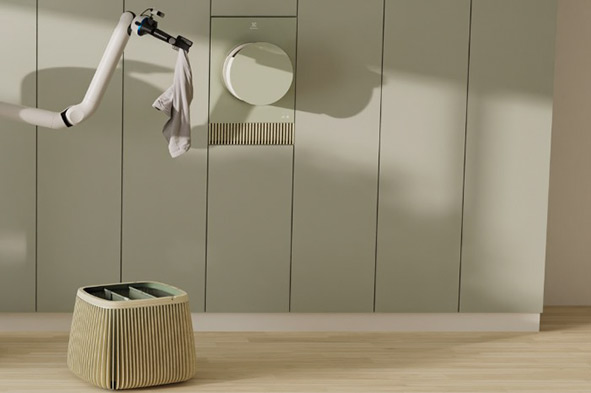
This compact laundry solution aims for a robot to help an elderly person living alone. The team designed a laundry basket with compartments and wheels, which the robot pulls over to the washing machine, built into the kitchen furniture at (human) waist height.
The drum pops out of the wall and the robot places the clothes inside. The drum pops back in and displays the remaining time via large, illuminated numbers on the front. When the cycle is complete, the drum pops out, a drawer underneath opens and the laundry falls out into the drawer. The robot can help take clothes to be hung to dry.
“The level of student storytelling drives us to be better. This partnership is not just about sharing our experience and expertise – we learn a lot from these talented students as we look to the future together,” says Martin Alexanderson, Senior Design Manager, CX Product Line Wellbeing.
Previous themes have included design for ”"”single people living in small spaces” (2022), ”"multigenerational home" (2021) and the ”"new normal" post-COVID world (2020).
Text: Ola Larsson