
2022.10.17
Washing without detergent – a possible next step
Washing with deionized water, and not using any detergent at all, is something that is currently being tested in a number of laundromats around the country. But the washing effect is controversial.
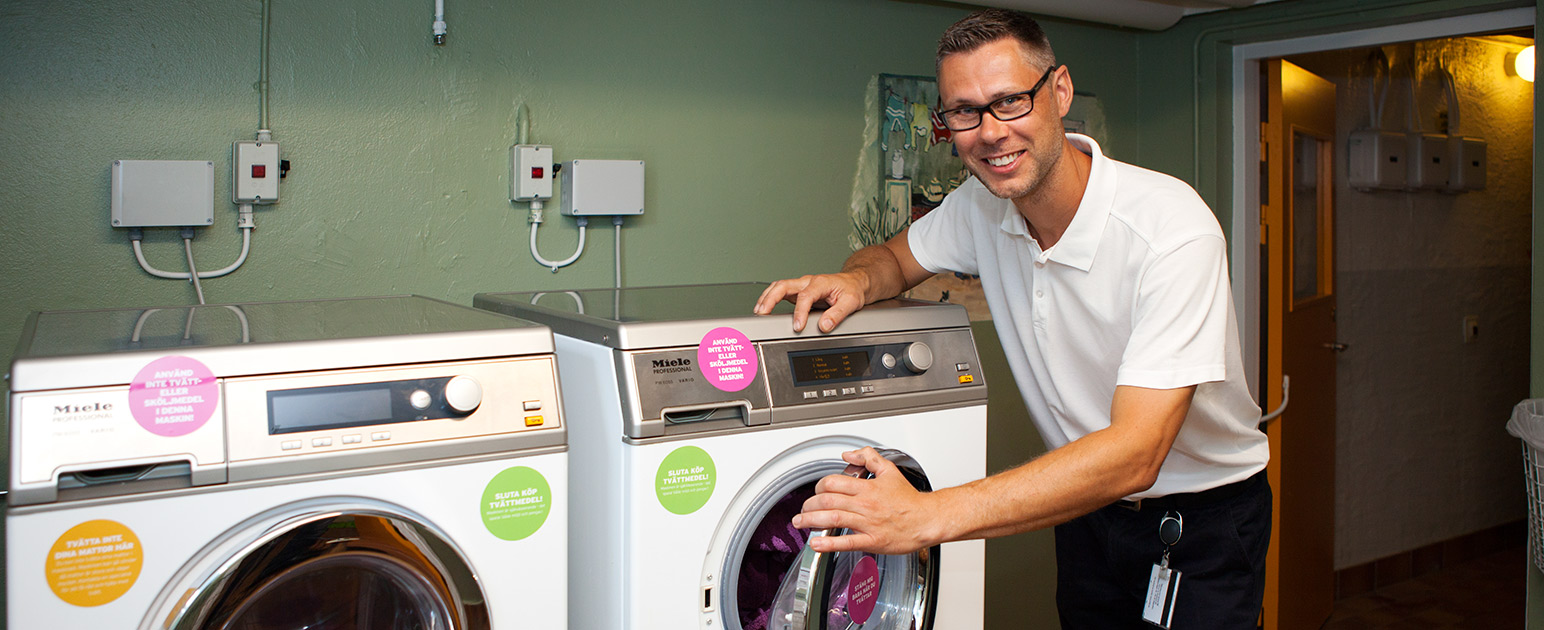
Tenants in two high-rise buildings in the Nydala residential area in Malmö became the first in the world to wash with deionized cold water and without detergent in 2016. That's when Malmö's municipal housing company MKB, with a total of 26,000 apartments, installed a system to filter and deionize the water in one of its more than 700 laundry rooms.
– No more buying detergent and fabric softener, and the machines also wash with cold water. This is something we are the first in the world to offer, said Magnus Röman, project manager at MKB Fastighets AB, when the pilot project was started.
After testing for a year, MKB announced in October 2017 that the pilot project with washing in cold water without detergent and fabric softener has been successful.
– It takes courage to test new solutions and to meet the challenge of climate change, new thinking is really needed. The reduced energy use in the current laundry room is so interesting that we have chosen to expand the project, said Jenny Holmquist, environmental strategist at MKB Fastighets AB.
MKB explains that the technology used cleans using deionized water, and writes that when the water comes into contact with the textiles in the washing machine, the ionic bond between the fibers and the dirt is broken, then the dirt particles are rinsed out with the rinse water, which leads to the textiles becoming clean. The technology is stated to work just as well in cold water as in hot.
To continue testing and evaluating the technology, MKB implemented an updated version of the technology in another laundry room at Rönnen Student.
Does it work or not?
The technology used for deionization of the water won the Malmö Clean Tech City Award in 2016 and was developed by the company Swatab, which in 2019 had around thirty pieces of equipment deployed in Sweden.
However, the method of washing without detergent has been criticized, including by Ulf Ellervik, professor of chemistry at Lund University, who believes that ultra-pure, deionized water has no other properties than ordinary tap water and therefore cannot dissolve grease.
In 2019, researcher David Wensbo Posaric noted that HSB tenants at Rinkebysvängen had been protesting for over six months against the newly renovated laundry rooms, with washing machines that wash with deionized water. Wensbo Posaric believes that washing with deionized water is akin to ”self-deception.”.
Mats Marklund, CEO of Swatab, was surprised by the criticism from the tenants at Rinkebysvängen because the company has run a lot of tests comparing their washing machines with washing machines that use detergent, and he said that they got very good washing results – not better results but on the same level as regular washing machines.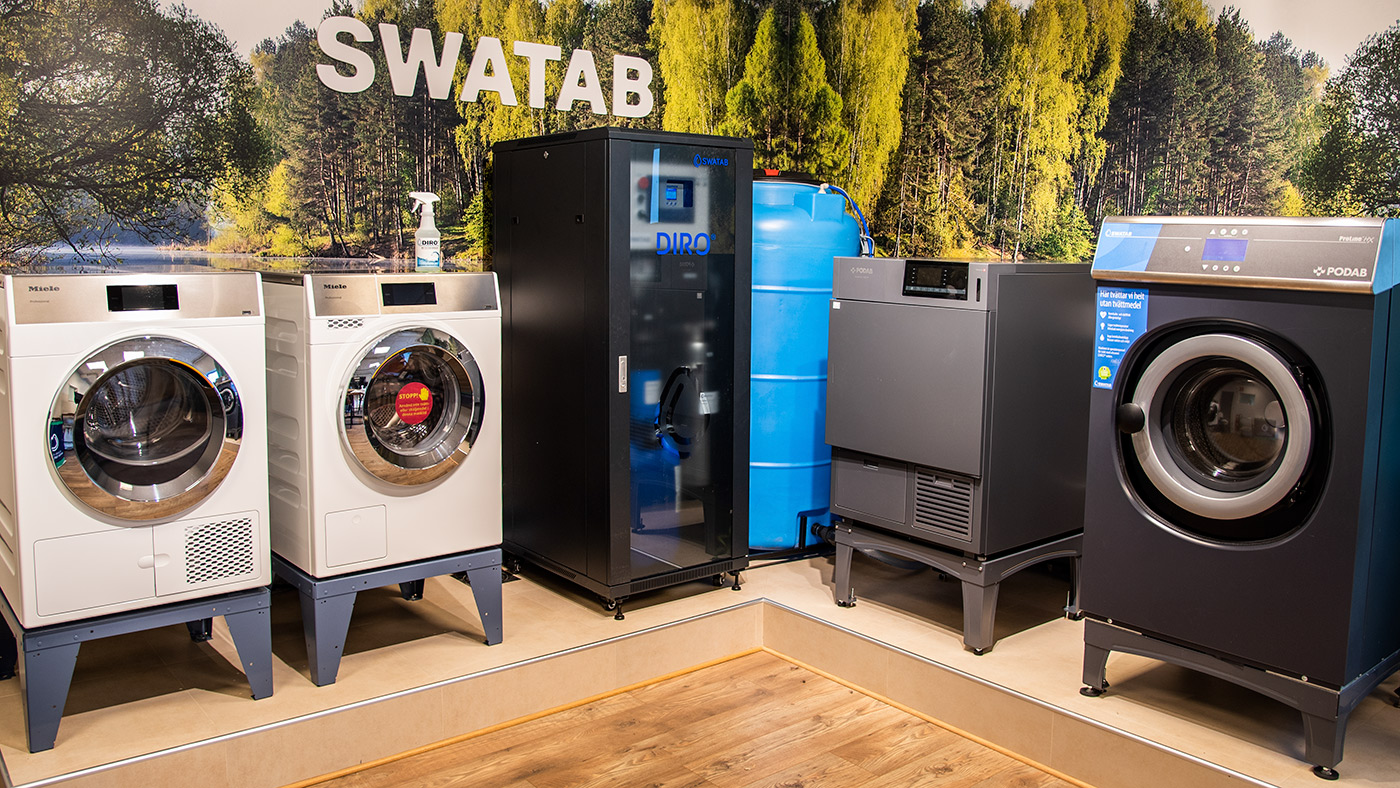
When the Järva news agency asked Mats Marklund if scientific tests had been conducted on the method, he replied that the company had not conducted basic research but had proven that it works in practice. The technology has evolved from facade cleaning where deionized water is used.
There are therefore divided opinions on whether the method works or not, and the future will tell whether this, in many ways environmentally friendly, way of doing laundry will really catch on or not.
If it were to become a great success and accepted practice in laundries, it is easy to guess that the technology will develop further and eventually appear in home laundry rooms as well.
Text: Ola Larsson